
When most people think about CCTV, they picture cameras silently watching over a property, capturing video footage for review if something goes wrong. And for many years, that was exactly what CCTV meant. But modern security systems have moved on significantly — and one of the most underused yet powerful features now available is audio recording.
In this guide, I’ll explain what audio CCTV is, why it matters, and how it could make a real difference to the security of your home or business.
What Is Audio CCTV?
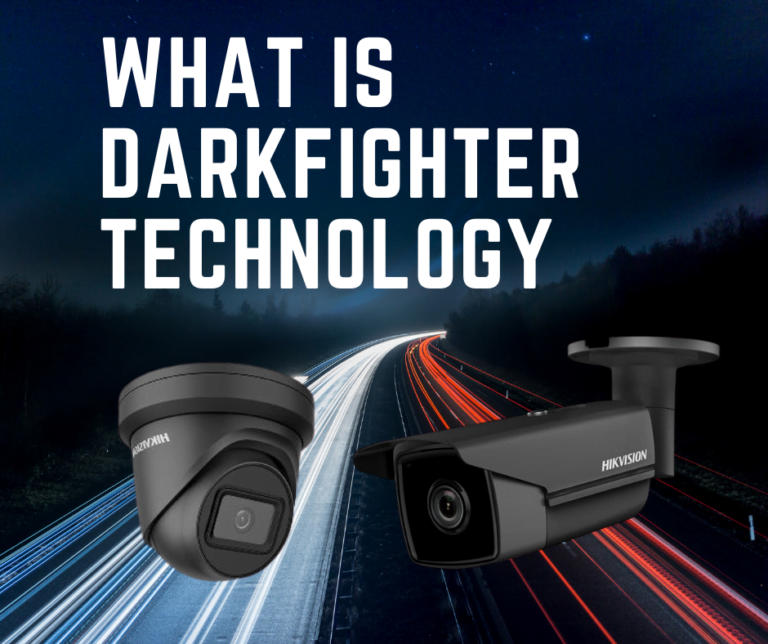
Audio CCTV refers to security cameras that are equipped with a built-in microphone — and in some cases, a speaker — allowing them to capture sound alongside video footage. Some models, like the Hikvision AcuSense range that we install here at Duke, use dual-microphone arrays with echo cancellation technology to deliver crystal-clear audio, capable of picking up sounds from up to 5 metres away.
This isn’t just about hearing what’s happening. It’s about building a far more complete picture of any incident — one that’s significantly more useful to you, to the police, and to a court of law.
Audio Strengthens the Value of Your Evidence
Video footage alone is powerful, but it has limits. You can see someone approaching your property. You can see a confrontation taking place. But what you often can’t determine from video alone is intent — what was said, what was threatened, and who was involved.
Audio recordings change that completely.
A 2017 study by Nottingham Trent University found that CCTV proved useful to police in 65% of crime investigations. In those cases, the probability of crimes being solved almost doubled — rising from 23% to 48%. Add audio into the mix and you’re giving investigators even more to work with: voice identification, conversations that establish motive or identity, and a clearer timeline of events.
In the UK, a person’s voice is classified as personal data under the UK GDPR, meaning audio recordings carry real evidential weight in court. Police can use recorded audio to identify culprits by name, location, or associates — information that simply wouldn’t be available from video alone.
A Powerful Deterrent in Its Own Right
Here’s something I’ve seen work time and again on commercial installs: the knowledge that someone is being listened to as well as watched has a measurable effect on behaviour.
We already know that visible CCTV cameras are one of the most effective deterrents available. Studies consistently show that 60–70% of burglars are less likely to target a property with visible cameras, and homes with CCTV are statistically 300% less likely to be broken into compared to those without. But audio takes deterrence a step further.
Some of the Hikvision cameras we install support two-way audio and active deterrence — meaning a monitoring operator (or you, via an app on your phone) can issue a live voice warning to anyone acting suspiciously on your property. Rather than waiting for a crime to be committed and reviewing footage afterwards, you can intervene as it’s happening.
Research backs this up: professional CCTV monitoring with audio intervention can prevent 50–70% of theft attempts in commercial environments — significantly outperforming passive recording, which achieves a 22–35% reduction on its own.
Particularly Valuable for Businesses
For business owners — especially those running pubs, restaurants, retail premises, or warehouses — audio CCTV addresses a very specific challenge: verbal incidents.
Physical altercations are obvious on video, but threatening behaviour, verbal abuse towards staff, and low-level harassment often don’t show up clearly in footage. Audio recording captures those incidents in full. For licensed premises in particular, audio evidence can be crucial when disputes arise with customers or when licensing authorities review incidents.
In fact, the UK’s Information Commissioner’s Office (ICO) specifically acknowledges that audio recording in business premises can be justified where staff are subject to verbal abuse — provided it’s operated appropriately and proportionately.
This can also benefit staff welfare. When employees know that verbal altercations are being recorded, it provides documentation that supports them in any disciplinary, legal, or HR process.
What Does the Law Say?
I want to be straightforward here, because audio recording does come with additional legal responsibilities compared to standard CCTV.
Under UK GDPR and the Data Protection Act 2018, audio recordings are treated as personal data. If you’re using audio CCTV in a business or on premises where it may capture the public, you’ll need to:
- ✅ Carry out a Data Protection Impact Assessment (DPIA) before deploying audio-enabled cameras
- ✅ Display clear signage informing people that audio recording is taking place — similar to standard CCTV signs
- ✅ Have a documented data retention policy specifying how long audio data is stored and how it’s securely deleted
- ✅ Store audio data securely, with encryption and access controls in place
The ICO is clear that audio should only be used where there is a genuine, proportionate justification — not, for example, to monitor routine staff conversations in a break room. Used correctly and in the right locations, it is entirely lawful and highly effective.
For home use, audio CCTV on your own private property is generally straightforward, provided the microphone isn’t capturing public spaces or neighbouring properties without justification.
If you’re unsure about your obligations, we’re happy to advise — and we ensure that every system we install is fully compliant.
Is Audio CCTV Right for You?
Audio CCTV is worth considering if you:
- ✅ Run a business where staff are exposed to verbal abuse or confrontation (pubs, retail, reception areas)
- ✅ Want to strengthen the evidential value of your footage for police or insurance purposes
- ✅ Are looking for active deterrence rather than passive recording
- ✅ Manage a property remotely and want to be able to issue voice warnings in real time
- ✅ Are installing a new Hikvision AcuSense system and want to maximise what it can do
You may not need audio recording if:
- ❌ You primarily need CCTV for perimeter monitoring at a distance
- ❌ Your main concern is capturing vehicle movements or number plates
- ❌ You operate in a setting where audio would be difficult to justify under GDPR (e.g., capturing large areas of public space)
The Bottom Line
Modern CCTV systems are capable of far more than they were even five years ago. Audio recording is one of the most impactful upgrades available — not just for the evidence it captures, but for the deterrence effect it creates and the protection it offers to your staff.
As always, the right solution depends on your specific situation. If you’d like to talk through whether audio-enabled cameras make sense for your home or business, book a free, no-obligation survey with us and we’ll give you an honest assessment.
📞 01733 639096
🔗 Book your free survey here
At Duke Security Systems, we install Hikvision CCTV and alarm systems across Peterborough and the surrounding area. All our systems are installed to professional standards with full compliance guidance included.